Anne Kirah
When culture meets technology and when technology meets culture
 |
Contact Information
Microsoft Paris
|
Biography
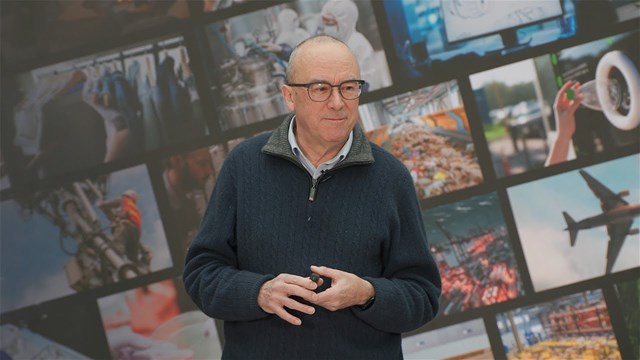
Anne Kirah serves as a design anthropologist for MSN. Kirah
leads field and laboratory research, including national and international
projects, intended to influence current and future Microsoft product, software
and service designs to improve humans’ interaction with technology. Kirah also
works with Microsoft partners and organizes the Microsoft Field Research Forum,
an internal discussion and quality control group. Using primarily ethnography
and participatory design methods, Kirah aims to improve the features,
interfaces and the general ease of use for many Microsoft products by giving
customers a voice during the product development cycle.
Kirah, who joined Microsoft in 1999, previously worked as a
research associate for Boeing, the world’s leading aircraft manufacturer. She
helped conceive quantitative research surveys for use onboard lengthy
international flights and led a team of interviewers seeking input from
passengers and crew to improve customer and employee satisfaction of aircraft
design. In addition, Kirah has worked as a lecturer for several higher
education institutions and state and local governments in the United States and
in Scandinavia; a program evaluator in the public health sector; an expert
witness in a variety of court cases; a primary investigator for many university
research projects; and a translator for the Scandinavian University Press.
Kirah has lived and worked extensively in Europe and Asia and is fluent in
English, Norwegian, Swedish and Danish. She also has some knowledge of French,
Japanese and Mandarin Chinese.
Kirah has written award-winning newspaper articles in Japan, edited and written books about contemporary Norwegian society and won several
research grants, fellowships and scholarships.
She holds an advanced graduate degree in social and cultural
anthropology, as well as undergraduate degrees in social anthropology, the
sociology of education and developmental psychology from the University of
Oslo, Norway. She also holds a master’s degree in psychology from the University of Washington.
Position Paper
This paper will discuss the dialectic between technology and
culture: Technology plays a role in transforming culture, but culture also
plays a role in transforming technologies. Using multiple case studies from
global ethnographic field research and participatory design in 12 countries, I
aim to show how, on the one hand, we find the level of technological
penetration as a mitigating factor in determining what types of social software
are being used and how they are being used. On the other hand, culture and
social context can actually thwart what is believed to be universally
successful social products.
The first set of case studies will show how the level of
broadband penetration and mobile penetration are determining product
development, usage and desire. We are able to see global trends develop using
these various levels of penetration as key indicators. What do Korea and Netherlands have in common? Both are amongst the highest level of broadband penetration in
the world. They are also amongst the most developed when it comes to social
software currently on the market both on the internet and on the mobile phone.
I will specifically discuss Cyworld and Lineage II (from Korea—the former is a
social software that literally exploded in the period of one year to become one
of the most important internet and mobile software services in Korea (and used
by all demographics). There are also social obligations that have developed in
likeness with the “real world”. I will also describe a similar site in the Netherlands built by a small local government for the local teenage community.
The second set of case studies will focus on the other side
of the coin. When does the culture and social context of communication in
everyday life determine the use of technology? Through a study in Japan, it will be shown how social and cultural contexts are major factors in determining
what technology is used, how it is used and why it is used. In Japan, the
importance of polite “manners” and consideration for others, long commute times
and limited household space, all contribute considerably to determining the
lack of success of instant messenger as a form of social software and
contribute to which solutions are successful. Through these insights, design
decisions specifically for that market have been made and have proven to be
successful. In a similar light, cultures with what we are calling “deep”
communication styles tend to use instant message services less than cultures
that have less “deep” communication styles. Italy and Spain will be used to explore the differences of these communication styles and the outcome it has
on social software.
A key take away from the field research done at the Customer Design Center is being aware that software takes on its own life based on the
cultural and social contexts of everyday life. At the same time, global trends
are developing based on the level of technological penetration. Understanding
the interplay between technology and culture through deep understanding of
peoples’ motivations and aspirations, will help us build software that is
useful, culturally relevant and desirable.
Back to Social Computing Symposium 2005
|