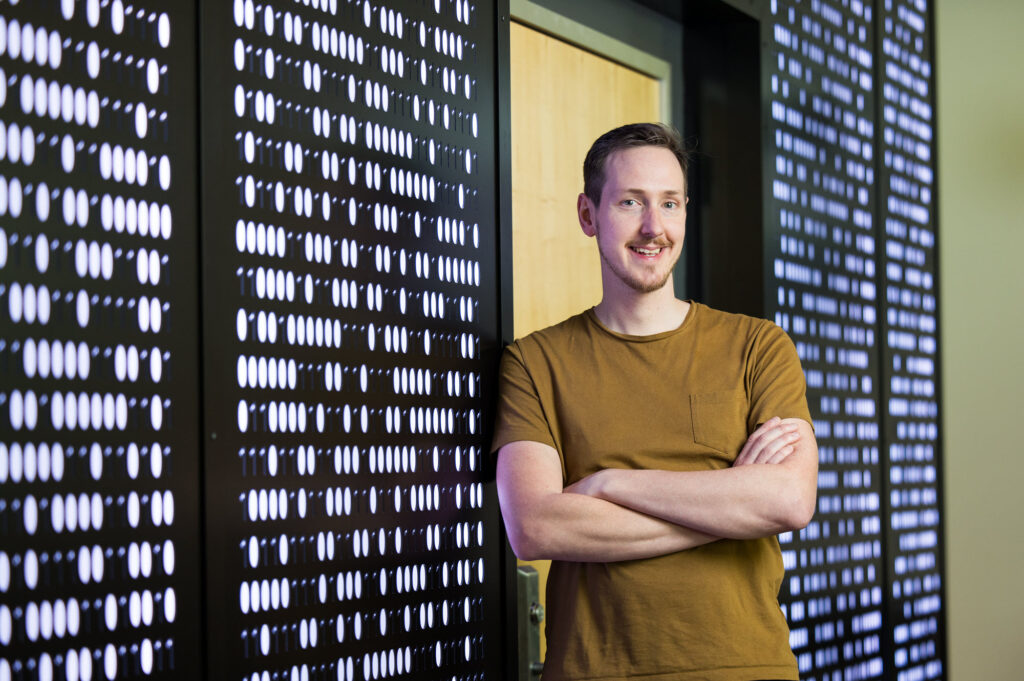
Director
Internet Services Research Center (ISRC) — Redmond
Microsoft Research
Microsoft Corp.
Yi-Min Wang is Director of Microsoft Research ISRC-Redmond, which is an applied research center established in July 2007 dedicated to accelerating innovations in search and ad technologies. In addition to working closely with product team Executives to guide the center’s direction and growth, Wang leads R&D groups in the areas of Internet security and reliability, search and ads quality, scalable online service systems, and new online service experiences.
Before joining ISRC, Wang was Manager of the Cybersecurity and Systems Management Research Group at MSR-Redmond, where he developed key security technologies to combat Internet threats including spyware, rootkits, malicious websites, cybersquatting, and search spam. He invented the Strider HoneyMonkeys to hunt down malicious websites that exploit unknown browser vulnerabilities. This technology has become the de facto standard for malicious-website detection across the industry. His work on Strider Typo-Patrol exposed and helped stop cybersquatters’ practice in serving adult ads harmful to minors on typo-squatting domains of children’s websites. He invented the Strider Search Ranger dynamic Web-analysis techniques to shed light on the shady business model of a large-scale search-spam industry and used an interview with John Markoff from the New York Times to educate the broader community and put pressure on legitimate businesses that were helping spammers hide their tracks. This effort significantly reduced spam in search engine results.
Before joining Microsoft in 1998, Wang was a principal member of technical staff at AT&T Labs, where he conducted research on distributed systems fault tolerance. On the theory side, Wang introduced Rollback-Dependency Trackability (RDT) as a fundamental concept in distributed checkpointing, which opened a new line of research in communication-induced checkpointing protocols. On the practice side, Wang introduced Progressive Retry in 1993 – a concept of deliberately introducing program execution non-determinism after a rollback in order to bypass software failures. He is a co-author of the widely-cited ACM Computing Surveys paper: “A Survey of Rollback-Recovery Protocols in Message-Passing Systems”.
Wang has published extensively in the areas of dependable computing and internet security. He is currently an associate editor of IEEE Transactions on Computers. He has served as a member of program committees in several international conferences, including IEEE International Conference on Dependable Systems and Networks (DSN), ACM Symposium on Principles of Distributed Computing (PODC), International Conference on Distributed Computing Systems (ICDCS), World Wide Web Conference (WWW), and Usenix Security Symposium. Wang has more than 40 granted and pending U.S. patents.
Wang received a bachelor of science degree in electrical engineering from National Taiwan University in 1986, a Master’s degree in electrical engineering (with a thesis on spectral estimation) in 1990, and a doctorate in computer engineering from University of Illinois at Urbana-Champaign in 1993.