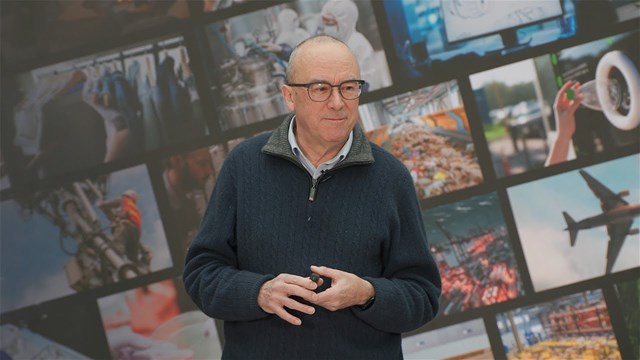
Yan Xu, Ph.D.
Senior Research Program Manager
Microsoft Research
Redmond, Washington, USA
Bio
Yan is responsible for research partnerships with academia, industry, and government related to data visualization, data mining, faceted search, high-performance computing, and workflow automation for research in Earth, Energy, and Environment. Her primary focus is on developing research collaborations using the Environmental Inforatics Framework (EIF). She is also responsible for the WorldWide Telescope Academic Program (WWT), which enables collaborations with academia worldwide to use WWT to facilitate a revolutionary seemless experience in astronomical research and science education. For the past five year, she has also been working closely with academic thought leaders in multiple disciplines on the Transform Science effort, which aims at building better scientists with an awareness of fourth paradigm computing.
She joined Microsoft Research in March 2006. Prior to working at Microsoft Research, Yan was a Sr. Software Architect and worked for several startup software companies for over ten years. Yan received her Ph.D. in Physics from McGill University, Canada.
Primary Technical Interests
Environmental Informatics
- accelerate discoverability, accessibility, and consumability of environmental data using innovative computing technologies.
Collaborations in this area focus on trasforming environmental data to information, to knowledge, and to making socila impact using Microsoft technologies embedded in the Environmental Informatics Framework (EIF). The current objective (in 2012) is to set forth examples of environmental informatics by using the EIF tools, such as OData, Windows Azure, Bing Maps for Developers, Silverlight/PivotViewer, WorldWide Telescope, Layerscape, to facilitate better research results in environmental sciences.
Building a Better Scientist
- raise the level of awareness of fourth paradigm computing in scientific research and education to create a new generation of scientists who can take advantage of the true power of today's computing technologies.
Collaborations in this area focus on Problem Based Learning (PBL) pedagogy research, interdisciplinary computational curriculum development, and Classroom wiki development. Over 40 academic researchers and educators who are passionate about bridging the gaps between scientific research and science education have shared their thoughts and innovative teaching experience in the Transform Science collection. With contributions from researchers and educators in various disciplines worldwide, this collection of wisdom on how to build a better scientist continues to grow. However, it is often difficult to find a venue to share thoughts and outcomes of efforts in this area. Please contact Microsoft Research, or email e3env@microsoft.com, if you'd like to add a paper to the Transform Science collection.
AstroInformatics and WWT Academic Program
"WorldWide Telescope (WWT) is the best VO implementation" (Alyssa Goodnman, Harvard University). The WWT Academic Program is focused on using WWT to advance astronomical research and science education. It enables collaborations with astronomical communities worldwide.