|
Director of Software Architecture, Cloud Computing Futures
|
|||
|
|
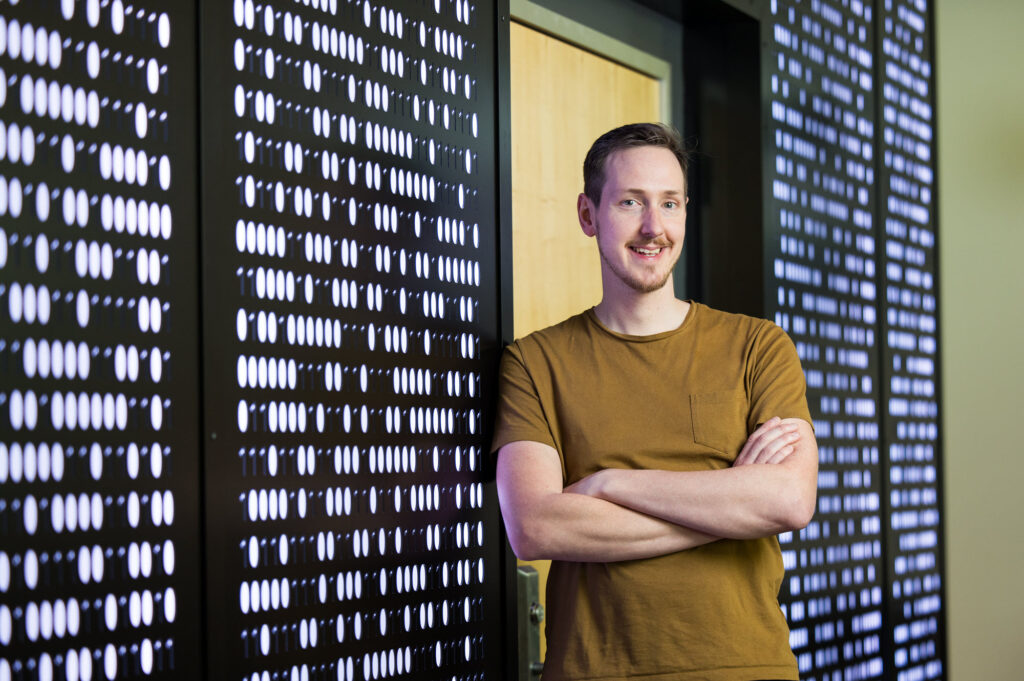
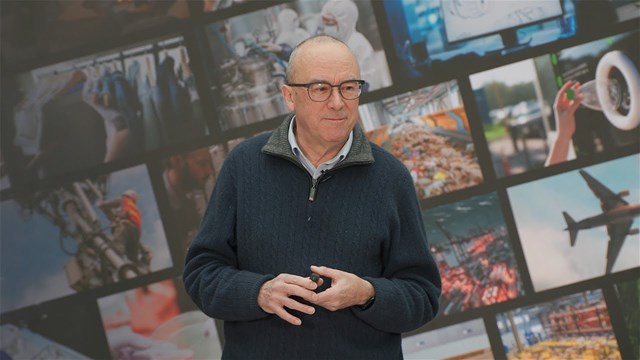
I am Director of Software Architecture for the Cloud Computing Futures (CCF) project in Microsoft Research led by Dan Reed. CCF is part of the new Extreme Computing Group (XCG), a new organization in Microsoft Research established to push the boundaries of computing. Our charter is to rethink computing at extreme scale—from alternative quantum computing models, through the revolutionary effects of Manycore parallelism, to the massive cloud computing infrastructure and applications that is the future of computing. As the name suggests, extreme computing is moving beyond the current practice and is rethinking how computing will be done in the next decades.
Most of my previous work and research at MSR focused on software development and the Singularity project. My papers and many talks are on-line.
I am on several editorial boards:
- Communications of the ACM (CACM)
- Computer Architecture Letters
- Software – Practice & Experience
- Open Software Engineering Journal
And, of course, I've served on program committees and government panels.
The complete details are in my CV.
Finally, take a look at my collection of notable quotes.
Brief Biography
James Larus is Director of Software Architecture for the Cloud Computing Futures team in Microsoft Research.
Larus has been an active contributor to the programming languages, compiler, and computer architecture communities. He has published many papers and served on numerous program committees and NSF and NRC panels. Larus became an ACM Fellow in 2006.
Larus joined Microsoft Research as a Senior Researcher in 1998 to start and, for five years, led the Software Productivity Tools (SPT) group, which developed and applied a variety of innovative techniques in static program analysis and constructed tools that found defects (bugs) in software. This group's research has both had considerable impact on the research community, as well as being shipped in Microsoft products such as the Static Driver Verifier and FX/Cop and other, widely-used internal software development tools. Larus then became the Research Area Manager for programming languages and tools and started the Singularity research project, which demonstrated that modern programming languages and software engineering techniques could fundamentally improve software architectures.
Before joining Microsoft, Larus was an Assistant and Associate Professor of Computer Science at the University of Wisconsin-Madison, where he published approximately 60 research papers and co-led the Wisconsin Wind Tunnel (WWT) research project with Professors Mark Hill and David Wood. WWT was a DARPA and NSF-funded project investigated new approaches to simulating, building, and programming parallel shared-memory computers. Larus’s research spanned a number of areas: including new and efficient techniques for measuring and recording executing programs’ behavior, tools for analyzing and manipulating compiled and linked programs, programming languages for parallel computing, tools for verifying program correctness, and techniques for compiler analysis and optimization.
Larus received his MS and PhD in Computer Science from the University of California, Berkeley in 1989, and an AB in Applied Mathematics from Harvard in 1980. At Berkeley, Larus developed one of the first systems to analyze Lisp programs and determine how to best execute them on a parallel computer.