

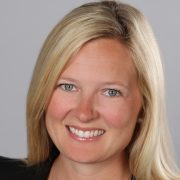
Krysta M. Svore
General Manager
About
I lead the Microsoft Quantum – Redmond (QuArC) group at Microsoft Research in Redmond, WA. I am passionate about quantum computation and determining how to solve some of the world’s most challenging problems by using a quantum computer. My research focuses on quantum algorithms and how to implement them, ranging from how to code them in a high-level programming language, to how to optimize the resources they require, to how to implement them in hardware. Our team works on designing a scalable, fault-tolerant software architecture for translating a high-level quantum program into a low-level, device-specific quantum implementation. We are thrilled to announce we are releasing in preview our quantum software stack by the end of the year. To gain access, sign up.
We also design algorithms and applications for quantum computers in areas such as quantum chemistry, materials science, machine learning, optimization, and more. We collaborate with theorists, experimentalists, algorithm designers, engineers, mathematicians, and more to develop the comprehensive, scalable quantum computer. To learn more about Microsoft’s distinct approach, visit Microsoft Quantum.
My other research interests include machine learning algorithms, both classical and quantum. I am interested in learning to rank algorithms, Web search and information retrieval, including features and training methods, and the dynamics of the Web and its users over time. I received my Ph.D. with Highest Distinction in Computer Science from Columbia University in 2006 under Dr. Alfred Aho and Dr. Joseph Traub. I spent part of my PhD with Dr. Isaac Chuang at MIT and Dr. John Preskill at Caltech, and interned with Dr. David DiVincenzo and Dr. Barbara Terhal at IBM Research. I received a B.A. in Mathematics, with a minor in Computer Science and French, from Princeton University in 2001.
If you are interested in applying for a Postdoc or Internship position, please follow the instructions on QuArC’s homepage.
Featured content
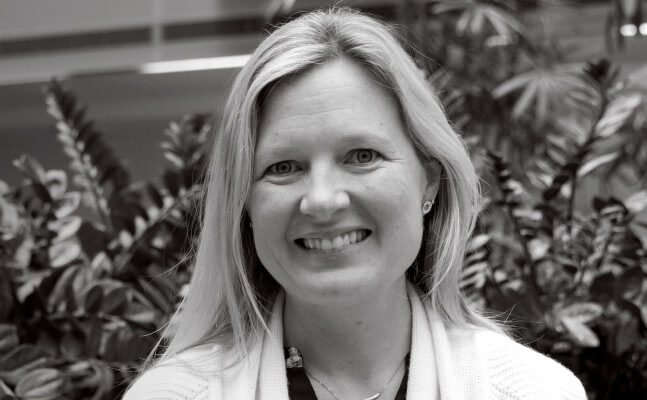
The future is quantum with Dr. Krysta Svore
Episode 8, January 17, 2018 - If someone mentions quantum computing, and you find yourself outwardly nodding your head, but secretly shaking it, you’re in good company: some of the world’s smartest people admit they don’t really understand it either. Fortunately, some of the world’s other smartest people, like Dr. Krysta Svore, Principal Research Manager of the Microsoft Quantum – or QuArC – group at Microsoft Research in Redmond, actually DO understand quantum computing, and are working hard to make it a reality. Today, Dr. Svore shares her passion for quantum algorithms and their potential to solve some of the world’s biggest problems, explains why Microsoft’s topological quantum bit – or qubit – is a game changer for quantum computing, and assures us that, although qubits live in dilution refrigerators at temperatures near absolute zero, quantum researchers can still sit in the comfort of their offices and work with the computer programmer’s equivalent of Schroedinger’s Cat.