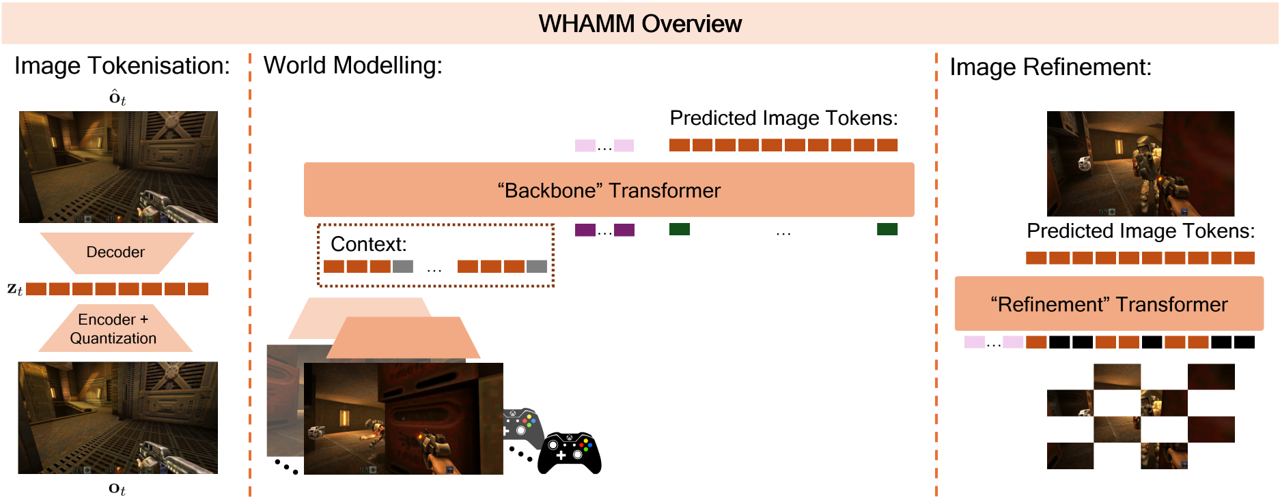
Microsoft Research The AI Revolution in Medicine, Revisited A Microsoft Research Podcast series Learn more Featured Articles Apr 4 WHAMM! Real-time world modelling of interactive environments. Featured Blogs Apr 2 VidTok introduces compact, efficient tokenization to enhance AI video processing Download Publication Featured Podcasts Mar 31 Ideas: Accelerating Foundation Models Research: AI for all Featured News Mar 26 Nuclear fusion: Delivering on the promise of carbon‑free power with the help of AI Articles Apr 7 PIKE-RAG: Enabling industrial LLM applications with domain-specific data Publications Mar 27 debug-gym: A Text-Based Environment for Interactive Debugging Podcasts Apr 3 Real-world healthcare AI development and deployment—at scale Publication Video Publications Apr 7 WABER: Evaluating Reliability and Efficiency of Web Agents with Existing Benchmarks Publications Jun 23 ReproCopilot: LLM-Driven Failure Reproduction with Dynamic Refinement Publications Jul 7 Deriving Semantic Checkers from Tests to Detect Silent Failures in Production Distributed Systems Publications Mar 31 Inference-Time Scaling for Complex Tasks: Where We Stand and What Lies Ahead Download Events Apr 26 Microsoft at CHI 2025 Publication Blogs Mar 26 Research Focus: Week of March 24, 2025 Publication News Mar 13 Jim Weinstein named among great leaders in healthcare by Becker's Hospital Review Loading Opens in a new tab
Featured Blogs Apr 2 VidTok introduces compact, efficient tokenization to enhance AI video processing Download Publication
Featured News Mar 26 Nuclear fusion: Delivering on the promise of carbon‑free power with the help of AI
Publications Apr 7 WABER: Evaluating Reliability and Efficiency of Web Agents with Existing Benchmarks
Publications Jul 7 Deriving Semantic Checkers from Tests to Detect Silent Failures in Production Distributed Systems
Publications Mar 31 Inference-Time Scaling for Complex Tasks: Where We Stand and What Lies Ahead Download